
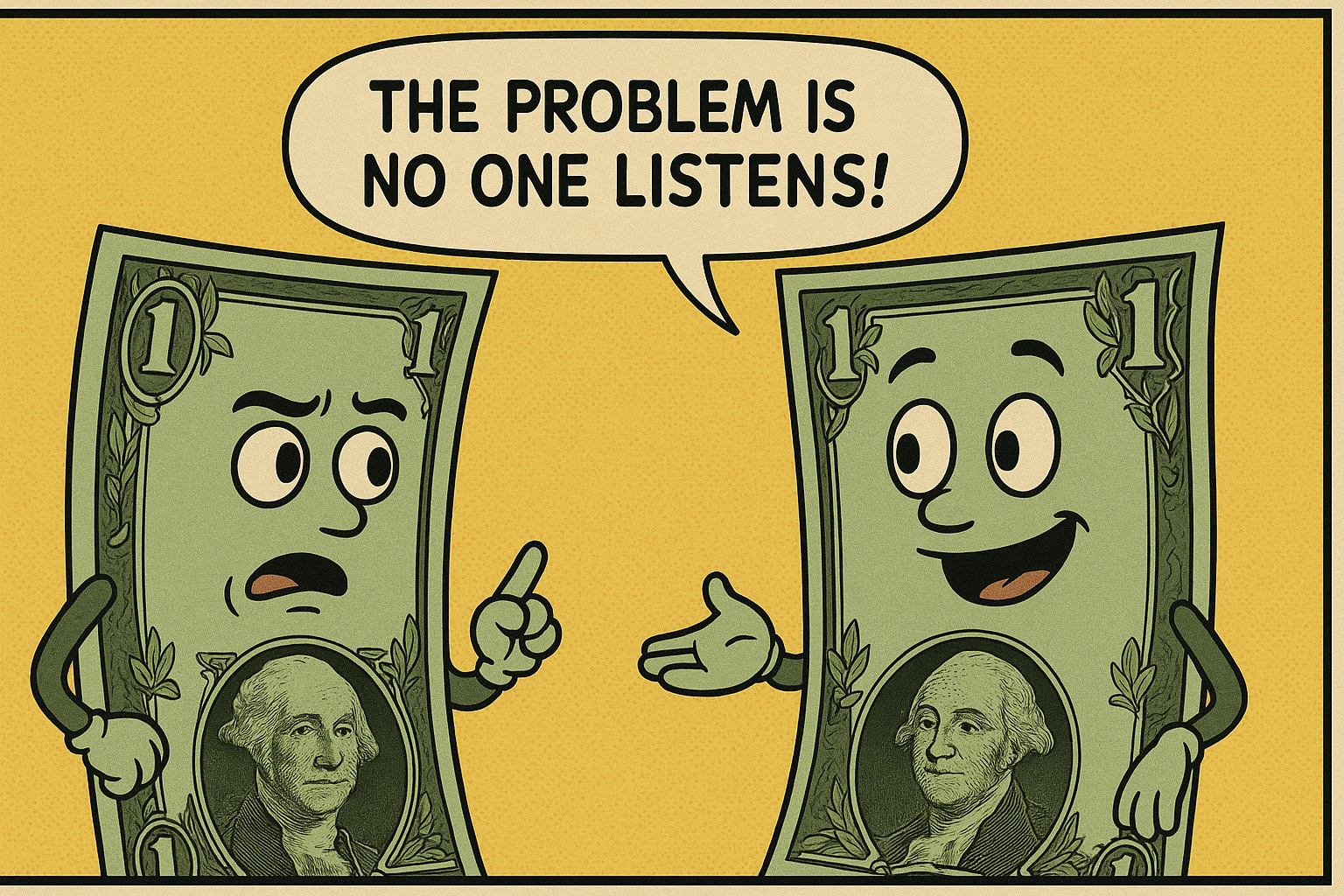
Money, whether we like it or not, touches every part of our lives. It can influence our goals, relationships, happiness, and stress levels for better or worse. Yet for many of us, talking about money feels awkward at best and downright embarrassing at worst.
Growing up, money was never something we discussed openly or honestly, especially when it came to adult finances. As I got older, I still rarely had meaningful conversations about money with those around me. As a result, I carried a sense of discomfort about these discussions into adulthood.
But here’s what I’ve learned: staying silent about money doesn’t protect us, it holds us back. The only way to take control of your financial future is to start having real conversations about money, even (and especially) when they feel uncomfortable.
Why We Avoid Talking About Money
Most of us were never taught how to talk about money, and when the financial conversations do come up, they often feel like having a root canal. Maybe you grew up in a household where money was tight and every dollar seemed to spark conflict. Or maybe your family was well-off but private, and discussing money was frowned upon. These early experiences shape how we communicate about finances, and they can create lasting misunderstandings, resentment, and avoidance.
Even with friends and partners, money talks can feel like you’re exposing yourself and all your flaws. Will they judge me for past financial mistakes? Or will it turn into a competition about who’s in a better financial position?
But the truth is, everyone is working through their own personal finances. No one has it all together, and unless you’re Elon Musk, there’s always someone richer. What matters is managing your money well and making progress on your own financial journey. The more we open up with these money talks, the more we can learn from each other and the more we can grow.
Conversations That Changed My Relationship with Money
One of the first real “money talks” I had was with my wife, Bianca, when we started seriously thinking about buying a house. We were both dreaming big of charming craftsman homes, nice neighborhoods, and maybe even a little backyard. But once we ran the numbers, we had a rude awakening. What we wanted and what we could actually afford were two very different things. Suddenly, Zillow browsing didn’t feel so fun anymore.
We were both stressing about the down payment, how we’d manage the monthly mortgage, and how to keep up with existing debts, credit cards, student loans, and car payments. They all added up too fast. The idea of owning a home felt exciting, but the financial reality was overwhelming.
One evening, we finally sat down and laid everything out: our savings, our debts, what we could realistically set aside each month, and our short-term versus long-term goals for homeownership. This money talk wasn’t about placing blame or judgment; it was about coming together to craft a plan to achieve our goal. On the surface, it was a conversation about buying a home, but it was so much more. We were learning how to build a life together financially.
That money talk, along with many others we’ve had since, wasn’t just helpful but it was foundational for both our financial future and our relationship.
How to Start the Money Conversation (Without Making It Weird)
Whether it’s with your partner, your parents, your friends, or even yourself, here are a few tips to get the ball rolling:
- Start with curiosity, not judgment.
Instead of pointing fingers, approach the conversation with the understanding that everyone has made financial mistakes—and most people already know it and feel stressed or ashamed. Your goal should be to learn about the other person’s money habits, which is far more powerful than shame. - Make it about shared goals.
With your partner, remember that the past is the past. Focus on future goals: “What do we want our life to look like in five years, and how do we get there financially?” - Use “I” statements.
Share your experiences and goals but don’t project your goals onto your partner. Remember that you’re two individuals who might have different goals—and no one goal is inherently “right.” Once you understand each other’s goals, it’s up to both of you to figure out which goals you want to move toward together. - Normalize it with friends.
Don’t let fear of missing out stop you from reaching your goals. Say “no” when you need to: “I’m trying to pay off debt this year, so I’m skipping happy hour this time.” You’ll be surprised how often others say, “Same!”
Why These Conversations Matter
Money talks aren’t just about dollars and cents. They’re about:
- Making better financial decisions
- Reducing stress and anxiety related to money
- Aligning your financial habits with your dreams and goals
- Crafting a plan to reach those dreams and goals
- Strengthening your relationships with friends and family
- Building a healthier, more informed relationship with money
Final Thoughts
When done right, money talks aren’t tough, awkward, or overly emotional—they can be enlightening, uplifting, and a powerful way to build trust and connection. You don’t need to be afraid of these conversations—you just need to have them. The more you normalize money talks, the more empowered you become.
Because at the end of the day, money talks are a necessity.