
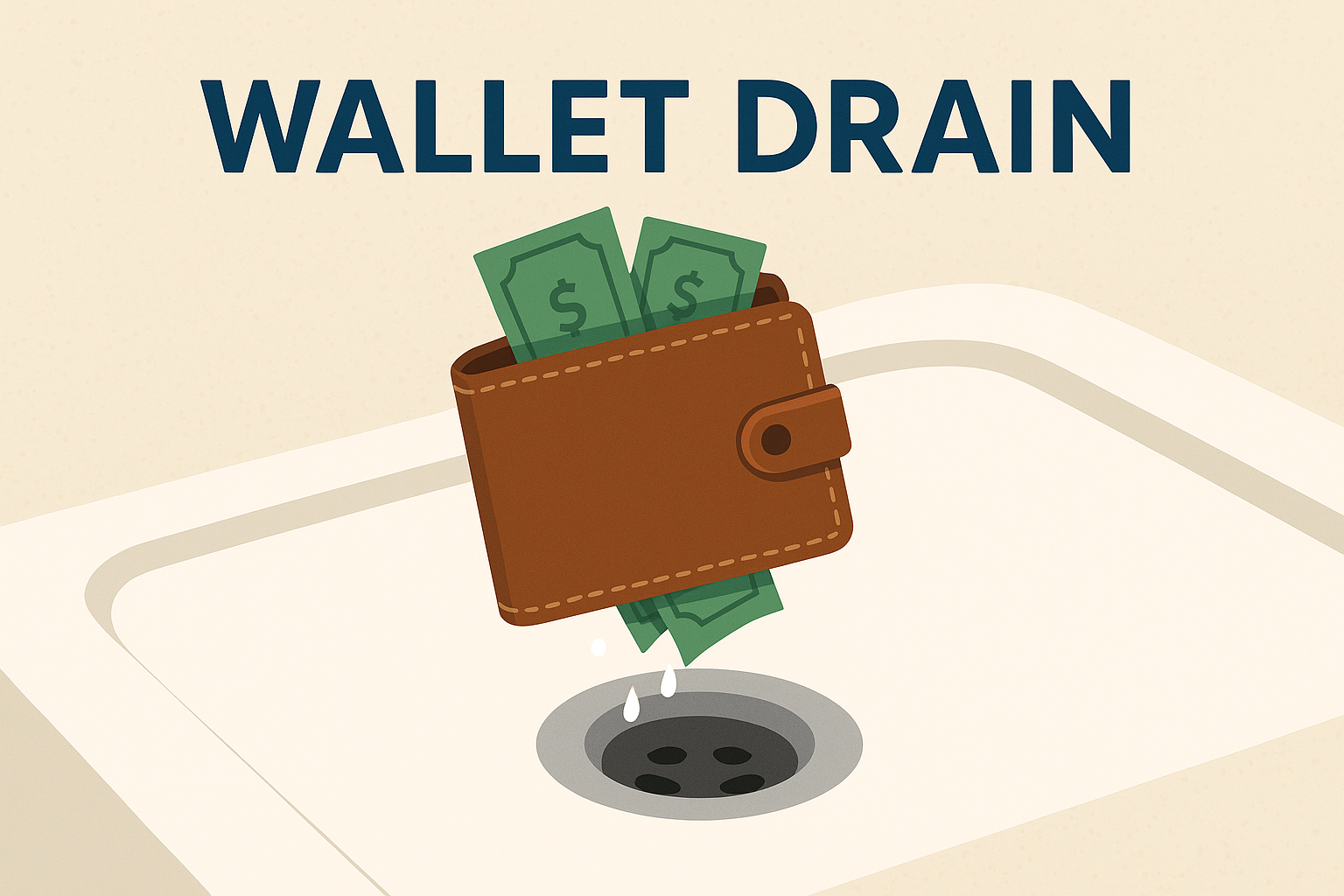
What Is Wallet Drain?
Have you ever checked your bank account and wondered: “Where did all my money go?”. That’s wallet drain at work. This happens when small, everyday expenses add up and silently drain your finances. These money leaks can prevent you from saving, investing, or hitting financial goals even if you earn a good income.
Common Causes of Wallet Drain
Our wallet draining of money often hides in places we don’t expect. Here are some common culprits:
- Subscription Overload
Streaming services, apps, and memberships you’ve forgotten about can quietly siphon cash each month. - Daily Splurges
Coffee runs, takeout lunches, and snack stops might seem small but add up quickly over time. - Impulse Purchases
Online shopping makes it easy to buy on a whim, often leading to regret and clutter. - Convenience Fees
Delivery charges, ATM fees, and service fees can eat into your budget without you noticing. - Energy and Utility Waste
Leaving lights on, running appliances unnecessarily, or failing to negotiate rates can inflate bills. - Bank Fees
Overdraft fees, maintenance charges, and late payments chip away at your balance.
Signs You’re Experiencing Wallet Drain
Wondering if you’re dealing with wallet drain? Look for these warning signs:
✅ You frequently ask, “Where did my money go?”
✅ You’re living paycheck to paycheck despite earning a decent income.
✅ Your savings aren’t growing as planned.
✅ Your credit card balances keep creeping up.
✅ Small purchases feel harmless but leave you short by month’s end.
How to Stop Wallet Drain
Here’s how to plug money leaks and keep more cash in your pocket:
1. Track Every Expense
Knowledge is power. Write down every purchase for at least a month to spot where your money is going. Use budgeting apps or a simple spreadsheet to stay organized.
2. Audit Your Subscriptions
Review your credit card and bank statements. Cancel subscriptions you no longer use or switch to cheaper plans. Services like Rocket Money can help identify forgotten subscriptions.
3. Set Spending Limits
Give yourself a realistic budget for non-essentials like dining out, shopping, or hobbies. Once you hit your limit, pause spending until next month.
4. Plan for Treats
Total deprivation leads to splurges. Budget small treats into your plan so you enjoy life without guilt.
5. Be Mindful of Fees
Avoid ATM fees by sticking to your bank’s network. Set reminders to pay bills on time. Shop around for lower rates on utilities, insurance, and services.
6. Practice the 24-Hour Rule
Delay impulse purchases for at least a day. Often, you’ll decide you don’t need it or find a better deal.
7. Automate Your Savings
Treat savings like a bill. Automatically transfer money to a savings or investment account every payday so you’re less tempted to spend.
Wallet Drain vs. Lifestyle Creep
It’s easy to confuse these two concepts as they are very closely related but I have provided quick definition of them both below showing casing the difference of them:
- Wallet drain = small, frequent money leaks that drain your budget without major lifestyle changes.
- Lifestyle creep = upgrading your lifestyle as your income grows (like moving into a pricier home or buying luxury items). See my blog post titled Lifestyle Creep: How to Avoid and Keep More of Your Money for more information on lifestyle creep.
Both can sabotage your financial goals, but wallet drain is sneakier because it hides in daily habits.
Final Thoughts on Avoiding Wallet Drain
Stopping wallet drain isn’t about living miserably or counting every penny. It’s about being intentional so your money goes toward what truly matters—whether that’s travel, security, retirement, or peace of mind.
Plugging small money leaks can free up hundreds or even thousands of dollars each year.
Ask yourself:
“Is this expense worth more to me than reaching my bigger goals?”
That’s how you avoid wallet drain and start building lasting financial freedom.
Have you experienced wallet drain? Share your biggest money leaks in the comments below and how you’ve plugged them!