
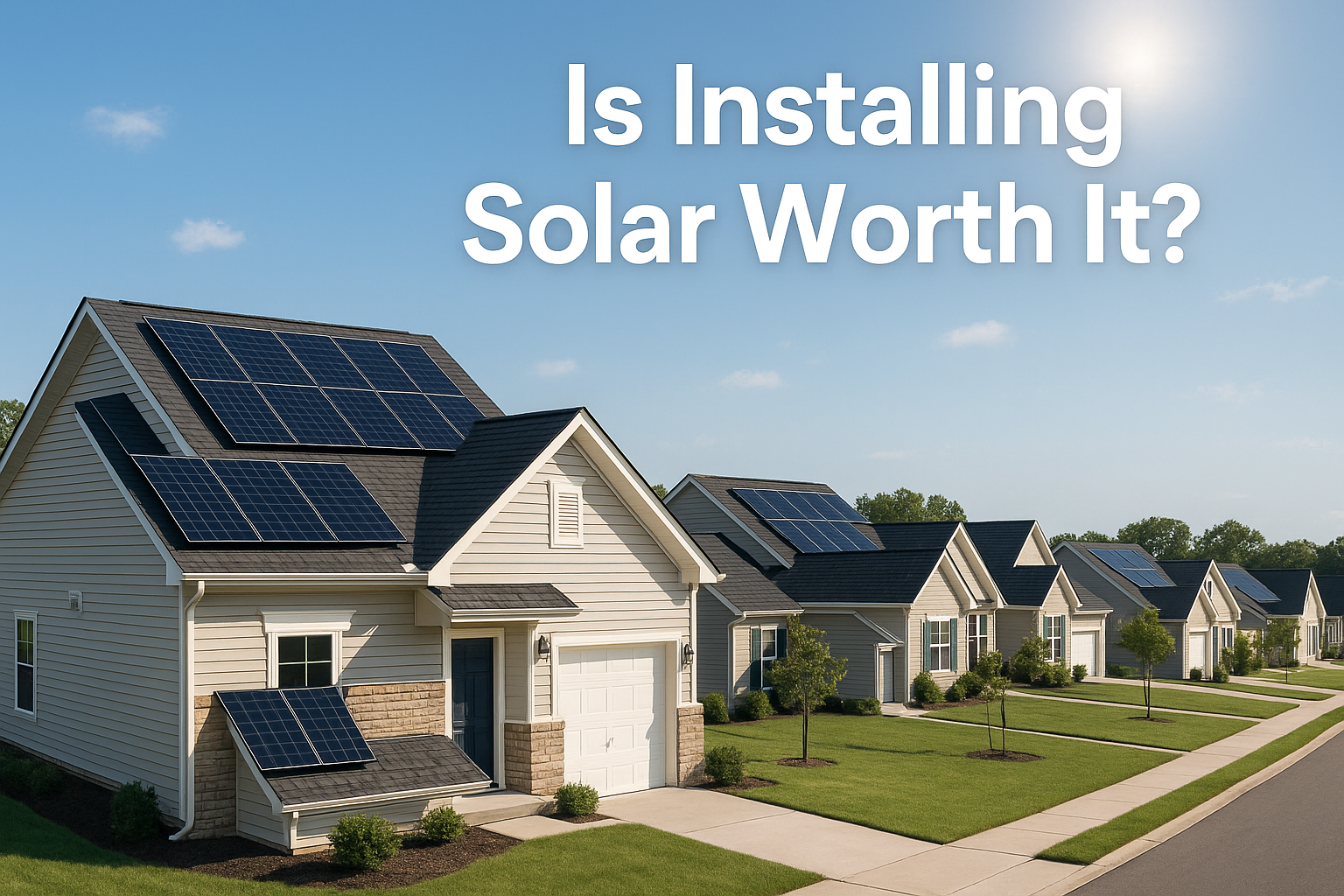
If you’ve been staring at your electric bill and wondering whether installing solar panels could finally give your wallet a break, you’re not alone. Many homeowners are asking the same question: Is installing solar worth it? Solar has become one of the most popular home upgrades for long-term savings, and with system costs coming down, it’s more affordable than ever.
In fact, California now requires most newly built homes to include solar as part of its building code. That’s how mainstream this technology has become. Whether you’re buying new construction or retrofitting an existing roof, solar is quickly becoming the standard not the exception.
But the big question remains:
How long does it take to break even on a solar system?
Let’s break it down, using my personal experience with solar.
☀️ The Background
My wife and I bought a newly built home in a suburb of Sacramento, CA. Since construction was finalized in 2023, our house was required to have solar panels installed, per California’s building code.
The homebuilder wrapped the cost of the solar system into the purchase price of the house. After a few conversations, I was able to determine that the solar setup added $8,000 to our purchase price.
Keep in mind our home is only 1,200 square feet, so our system is on the smaller (and cheaper) side. The larger the house, the bigger and more expensive the system you’ll need to install.
Our solar setup generates about 450 kWh during peak summer months. Of course, that number fluctuates depending on the month and weather.
⚙️ Assumptions
To answer whether installing solar is worth it, I’m keeping the math simple and using two core assumptions:
- I’m using the kWh generated in June (a peak solar month) to estimate annual output.
- I’m assuming similar solar generation (from bullet point one) throughout the system’s lifetime, as California has abundant sunshine year-round.
Now let’s look at the math.
📉 Factor in the Federal Solar Tax Credit (ITC)
As of 2023, the federal tax credit covered 30% of the total solar system cost (this credit is still active in 2025, as far as I know). That means I was able to deduct 30% of $8,000 from my taxes:
$8,000 × 0.30 = $2,400
Net cost of system = $8,000 – $2,400 = $5,600
Not bad, right?
🔌 How Much Will You Save on Electricity?
This depends on:
- Electricity rates
- System size
- Sun exposure (location)
In my case:
- We pay $0.1469 per kWh.
- We sell back excess energy at $0.0691 per kWh.
- We generate around 451 kWh/month × 12 = 5,412 kWh/year
5,412 kWh × $0.0691 = ~$374 in annual savings
💸 So When Did I Break Even?
Breakeven = Net System Cost ÷ Annual Savings
$5,600 ÷ $374 ≈ 14.97 years
So it’ll take nearly 15 years for us to recoup our investment.
🛠️ But Wait—What About Maintenance Costs?
Solar panels are famously low-maintenance, but there are still a few expenses to consider:
- Inverter replacement: $1,500–$3,000 (typically every 10–15 years)
- Occasional cleaning: $100–$200/year (or DIY)
- Minor repairs: rare, but possible
Let’s assume $200/year for general upkeep. Over time, that adds up.
If I include these maintenance costs, the breakeven timeline extends by another 8 years, bringing the total breakeven to 23 years… Gross.
📈 Lifetime Savings Potential
Solar panels typically last 25–30 years. If I break even in 23 years, that leaves just 7 years of “true” savings.
$374 × 7 = $2,618 total net savings
Unless my electric provider drastically increases the rate they pay for solar energy, I’ll barely see any real financial return.
🔚 Final Thoughts – Was Installing Solar Worth it?
If you’re like me and already have relatively low electric bills and weak buyback rates, solar might not be the financial slam dunk it’s often made out to be. Even with an $8,000 system:
- Net cost after tax credit: $5,600
- Annual savings: ~$374
- Yearly maintenance: ~$200
- Breakeven: ~23 years
- Lifetime savings: modest, at best
So while it’s definitely good for the planet, it doesn’t do much for my wallet at least not in the short term.
Thinking about solar?
Check with local installers for a custom quote and use your most recent electric bill to get a realistic idea of your potential payoff.