
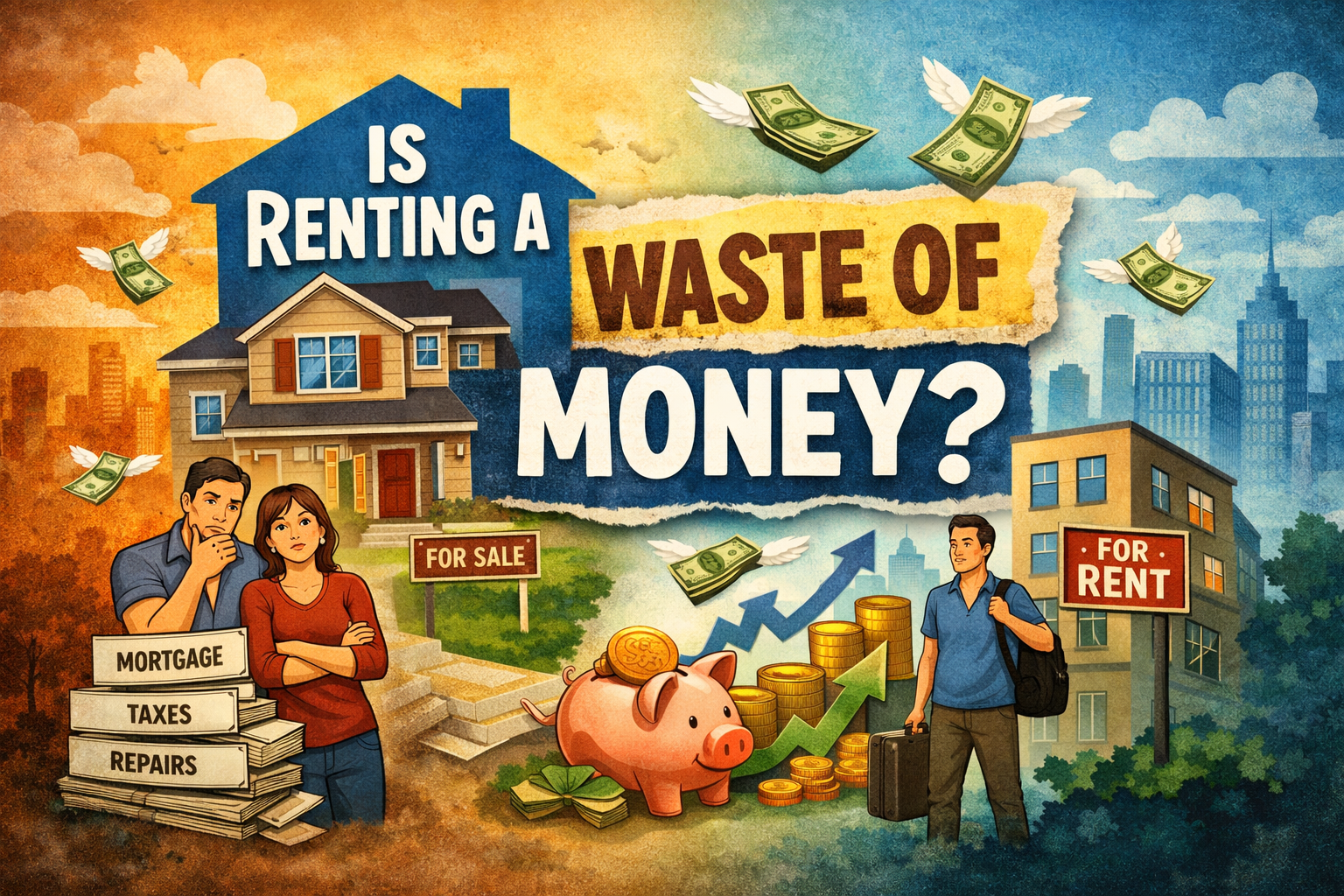
We’ve all heard it:
“Renting is a waste of money.”
“Renting is literally throwing money away.”
The phrase renting is a waste of money gets repeated so often that many people accept it as fact without ever questioning it. It’s rooted in the American Dream narrative the belief that owning a home is good, while renting is inherently bad. Add in social pressure, and we’re left with a society that doesn’t fully understand the real pros and cons of renting versus homeownership. And its lead us to pretty crazy ideas to make homeownership more “affordable”
But what if renting isn’t a waste of money at all?
What if renting actually saves you money and allows you to invest?
What if renting is the right choice for your life right now?
More often than not, people buy based on emotion, not solid financial analysis. They get swept up in social pressure, the allure of a backyard, a gourmet kitchen, or the dream soaking tub.
But if you actually run the numbers and compare the true cost of owning versus renting, you might discover that believing renting is a waste of money could be costing you more than you think.
Where the “Renting Is a Waste” Idea Comes From
he main argument behind the idea that renting is a waste of money comes down to equity.
When you own a home, you build equity with each mortgage payment. When you rent, you’re paying someone else’s mortgage. That part is technically true.
But the narrative goes deeper.
As Americans, we’ve been fed the idea that a perfect life includes a home with a white picket fence, a yard, and a dog. If we’re renting, it can feel like we’re falling short of that dream and that feeling reinforces the belief that renting is a waste of money.
There’s also cultural pressure:
- If you’re starting a family, you “should” buy.
- Renting into your 30s or 40s is sometimes seen as failure.
- Stability is often equated with ownership.
On top of that, people know there are advantages to owning:
- Building equity
- Potential appreciation
- Tax deductions
Those benefits are real, but they don’t automatically mean renting is a waste of money. They just mean ownership has advantages in certain situations.
The Case for Buying (When It Makes Sense)
There are legitimate reasons to buy.
1. Building Equity
Each mortgage payment includes principal that increases your ownership stake. Over time, that builds wealth, though it’s a very illiquid form of wealth.
2. Appreciation
Home values tend to rise over long periods. The longer you own, the more likely your property increases in value.
3. Tax Benefits
You may be able to deduct mortgage interest and property taxes (subject to limits). Depending on your tax bracket, this can be meaningful.
4. Stability and Control
You don’t have to worry about lease renewals or landlords selling the property. You can renovate and truly make it your own.
Homeownership absolutely makes sense in the right circumstances.
The Hidden Costs of Homeownership
But this is where the “renting is a waste of money” argument starts to fall apart.
Property Taxes
My wife and I pay over $8,000 per year in property taxes, about $666 per month added to our housing costs.
Homeowners Insurance
Mine is about $60 per month. My in-laws, who live in a fire-prone area, pay thousands per year.
Maintenance & Repairs
A common rule of thumb is 1–2% of the home’s value annually.
On a $400,000 home, that’s $4,000–$8,000 per year.
Roofs fail. HVAC systems break. Water heaters leak.
HOA Fees
HOAs can range from $50 to several hundred dollars per month.
Solar Costs (Location Dependent)
In some states like California, solar is required for new builds, adding another $50–$100+ per month. And don’t even get my started on when you breakeven from this added expense.
Illiquidity
Selling a home can take months. Your equity isn’t easily accessible.
When you factor in all of this, it becomes much harder to confidently say renting is a waste of money. Sometimes, owning is dramatically more expensive.
What about the Cases for Renting?
Now let’s flip the script.
Flexibility
Renting gives you mobility. Breaking a lease has a cost, but it’s often minor compared to realtor commissions and closing costs.
Predictable Expenses
When renting, your rent is typically your maximum housing cost.
When owning, your mortgage is your minimum housing cost.
Lower Upfront Capital
Renting may require a few thousand dollars upfront. Buying often requires tens of thousands.
Opportunity Cost Advantage
If you invest the money you didn’t put into a down payment, and invest the monthly difference, you can build significant wealth.
In the right scenario, renting is not a waste of money, it’s a strategic financial decision.
Simple scenario comparing the differencing of rent vs buying
Let’s assume:
Home Price: $500,000
Down Payment (20%): $100,000
Mortgage: $400,000
Interest Rate: 7%
Property Tax + Insurance + Maintenance: $900/month
Estimated Monthly Mortgage Payment (Principal + Interest):
~$2,660
Total Monthly Ownership Cost:
$2,660 + $900 = ~$3,560
Now compare that to renting a similar home for:
Rent: $2,400/month
That’s a $1,160 monthly difference.
The Real Question: It’s Not Rent vs. Buy
Instead, ask:
- How long will we live here?
- What does it cost to rent a similar property?
- What’s the interest rate?
- What could we earn by investing the difference?
- Are we buying for lifestyle reasons or financial reasons?
Buying isn’t bad. Renting isn’t bad.
Blindly believing renting is a waste of money without running the numbers? That’s the real mistake.
Conclusion: Is Renting a Waste?
No, renting is not a waste of money.
It provides:
- Flexibility
- Predictable expenses
- Lower upfront risk
- Liquidity
Homeownership can absolutely be the right move. But it isn’t automatically superior in every market or life stage.
Make the decision based on math and your priorities not social pressure or a slogan that says renting is a waste of money.
Run the numbers.
Then choose intentionally.
Leave a Reply