
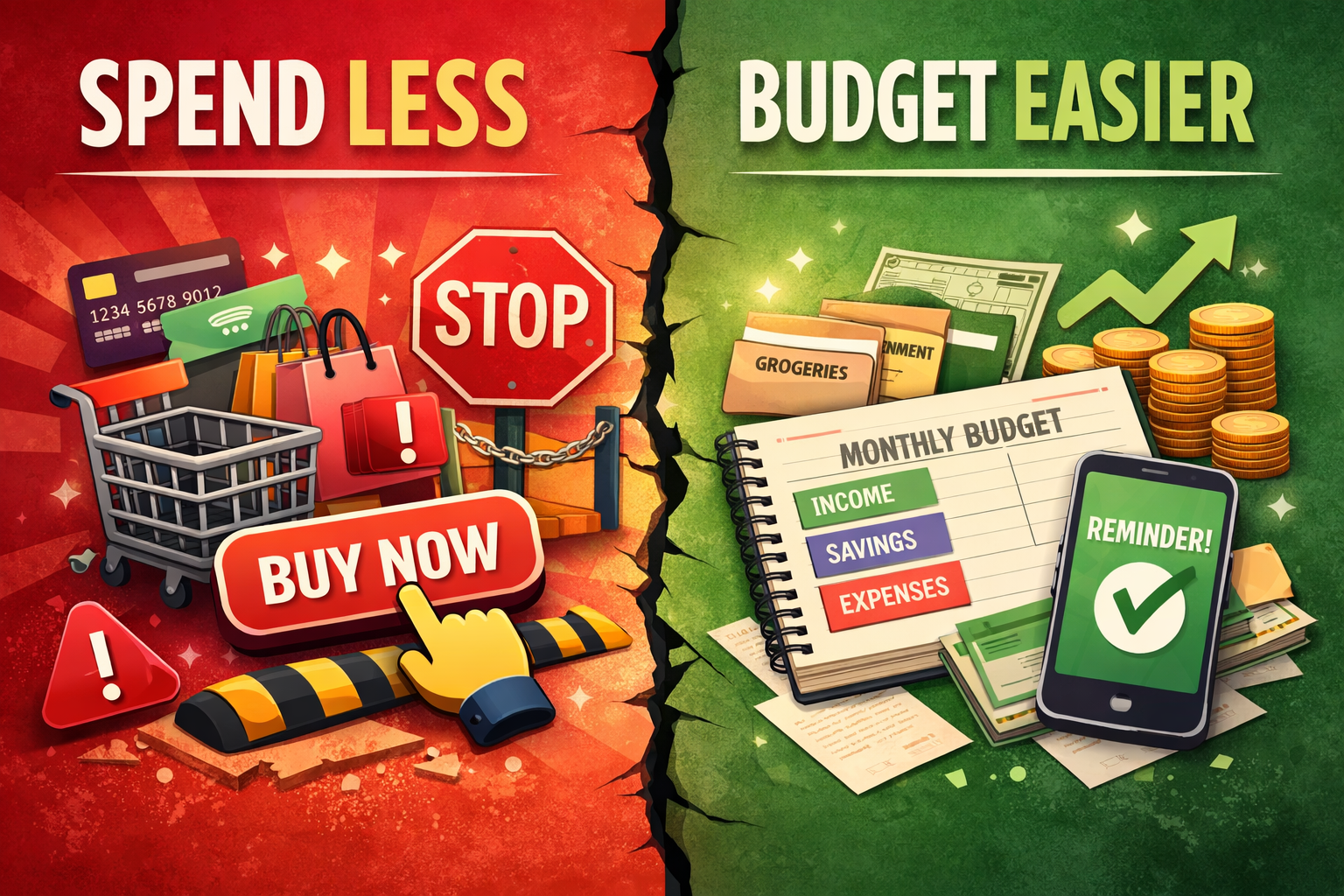
Most budgets don’t fail because we can’t do simple math. They fail because, as consumers, we face loads of friction in the budgeting process. Meanwhile, big businesses are incredibly good at eliminating friction in the payment process. It’s obvious that companies optimize anything and everything to get you to spend more money than you even realize.
Some of the ways they do this include one-click “buy now” options, tap to pay, buy now pay later services, and auto-filled payment methods. While these seem like conveniences to us, they are really systems designed to get us to spend more.
If you think about it, where is the moment to stop and reflect on a purchase? Is there a time to second-guess yourself? Are we ever asked, “Are you sure you want to do this?”
No. Businesses know that hesitation is friction, and if you’re given that opportunity, you’re more likely to put the item back, remove it from your online cart, or order less.
On the budgeting side, businesses have largely moved away from paper receipts. While that’s good for the planet, it actually increases friction in the budgeting process. When presented with the option to receive a receipt, we’re often asked to enter our phone number or email address to receive it electronically. And when the line is piling up behind us, do we really want to take the time to type in our email? I know I don’t.
Additionally, that electronic receipt becomes out of sight, out of mind, buried in a long list of emails or texts we receive daily. A physical receipt, on the other hand, serves as a visible reminder to log our expenses.
It’s up to us as consumers to increase friction when buying and reduce friction when budgeting.
In other words: make spending harder and budgeting easier.
What Is Friction in Personal Finance?
Broadly speaking, friction is any obstacle (or lack thereof) that affects your decision when making a financial choice. Is there something slowing you down? Or is it pedal to the metal when making a purchase?
If there’s a metaphorical speed bump, friction is present in the transaction. Examples include having to click “add to cart” and then “complete purchase,” or getting in your car, driving to the store, grabbing the item, walking to the counter, and paying. Both situations give you time to think about whether you truly need the item.
If there’s no speed bump, you can fly down the transaction road without anything slowing you down. The best example is one-click buying. Companies like Amazon now save your payment information so you no longer need to grab your wallet and manually enter your card details.
The less friction there is, the easier it is to spend.
Why Increasing Friction Reduces Spending
Delayed gratification improves decision-making for several reasons.
First, it removes the emotional component and allows us to think more critically. You may have heard of the “lizard brain” theory — the idea that our primitive brain drives emotional, impulsive reactions. If you give yourself even a few seconds, your response shifts to the part of your brain responsible for reasoning and judgment rather than emotion.
Second, it reduces instant gratification. The problem with instant gratification is that we’re often chasing a dopamine release, the same chemical response associated with pleasure, excitement, and reward. Dopamine itself isn’t bad, but chasing quick hits of it can lead to poor financial decisions. We shouldn’t be making money choices for a temporary emotional high.
Ways to Increase Friction in Spending
There are numerous ways to introduce friction into your spending habits. Some are straightforward; others require a bit more creativity.
1. Remove Saved Credit Cards
This forces you to find your wallet and manually enter your card details. That extra time gives your brain a chance to shift from emotional impulse to critical thinking.
2. Turn Off One-Click Buying
Similar to removing saved cards, disabling one-click purchasing prevents instant gratification and gives you time to reconsider the purchase.
3. Use Cash for Purchases
Numerous studies have shown that people tend to spend more when using credit or debit cards because the “pain of paying” feels less tangible. Handing over physical cash increases awareness of spending and makes purchases feel more real.
4. Avoid Spending Triggers
This comes down to knowing yourself. What causes you to spend more than you’d like?
For me, it’s retail emails, browsing Amazon, or even having an alcoholic drink before shopping. If promotional emails tempt you to spend, unsubscribe. Or if browsing online leads to impulse buys, stop browsing.
If you don’t see the item, you won’t feel the urge to buy it.
5. The 24–48 Hour Rule
For non-essential purchases, wait 24 to 48 hours before buying. At the end of that period, if you still want the item and it fits within your budget, go ahead and purchase it.
In my experience, 9 times out of 10 I forget about the item entirely. That proves it wasn’t a true need, it was an emotional impulse.
Make Budgeting Easier
We’ve talked a lot about increasing friction in spending. Now let’s reduce friction in budgeting.
1. Create a System (or Use a Tool) That Works for You
There are many budgeting methods and tools available. You just need to find one that fits your personality and lifestyle. Examples include:
- 50/30/20 budgeting method
- Zero-based budgeting
- Cash envelope system
- Monarch budgeting tool
- A self-built Excel spreadsheet
Each option has pros and cons. The key is choosing something that removes friction so you can stay consistent.
What works for me might not work for you, and that’s okay. Just find something you can stick with.
2. Create Budget Reminders
Once you choose a system, keep it on top of your mind. For me, that means getting paper receipts and keeping them in a visible place, so I remember to update my budget.
For you, it could mean writing a reminder on a fridge whiteboard, setting phone alerts, or scheduling a weekly budgeting appointment.
The more visible budgeting is in your life, the more likely you are to stick with it.
3. Turn It into a Challenge
I’m a highly competitive person, and I love setting challenges for myself. One way I stay on track is by creating budget challenges that push me outside my comfort zone.
Sometimes that means lowering my grocery budget and shopping at cheaper stores. Other times it means reducing my eating-out budget and packing lunch for work.
These challenges keep things interesting and prove that cutting expenses is often easier than we think.
Objections?
I know many people will have objections to increasing friction in spending and reducing friction in budgeting.
Some might say it sounds inconvenient or difficult, and yes, that’s the point. Businesses want spending to be easy. Don’t fall for it. Make spending harder and budgeting easier. Your future self will thank you.
Others might say, “I don’t have time to budget.” That’s simply not true. It takes me no more than 15 minutes a week to update my budget. Meanwhile, the average person spends hours watching TV every night.
We have the time. The question is whether we’re willing to make a small change that creates a lasting impact.
Some might say, “I don’t want to make life harder.” But you’re not making life harder you’re making it harder to make bad decisions.
If you spend freely, don’t budget, and don’t have an emergency fund, life becomes much harder when unexpected expenses arise. Trying to dig out of debt or scramble for cash during a financial emergency is far more stressful than building better systems today.
Action Plan to Start this Week
You don’t need to make drastic changes to see results. Small steps, implemented consistently, can make a big difference. Instead of trying to overhaul everything at once, focus on three simple actions you can take right now:
- Delete saved cards from your favorite shopping websites.
- Unsubscribe from retail emails that tempt you to spend.
- Turn off one-click buying options wherever possible.
If you want extra credit, spend some time journaling about your spending triggers. What situations, emotions, or environments cause you to spend more than you’d like? Once you identify those triggers, you can make intentional adjustments to reduce unnecessary spending.
Conclusion
Discipline can only take you so far if you don’t have the right systems in place. As James Clear, author of Atomic Habits, said:
“You do not rise to the level of your goals. You fall to the level of your systems.”
If you master friction in both your spending and budgeting systems, you’ll be far more likely to achieve your financial goals.
And remember: friction, when used properly, can be your secret weapon.
Leave a Reply