
Anyone else ever feel like we’ve entered a world of insurance overload?
I understand that insurance can be incredibly helpful in times of need, especially when it comes to health, auto, and homeowners insurance.
However, there are some types of insurance that are just downright crazy if you ask me.
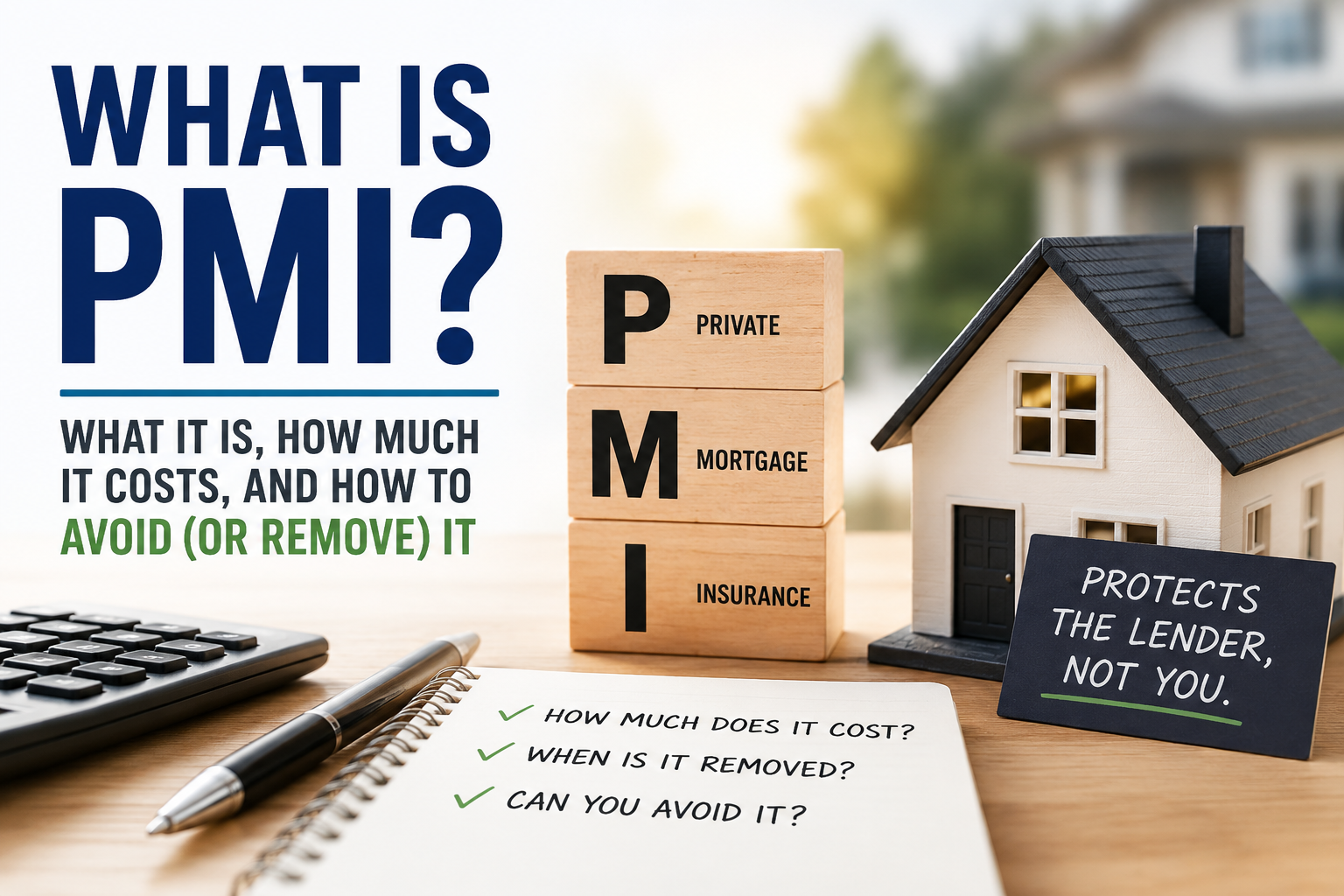
Private Mortgage Insurance (PMI) is one of them.
It has become an added burden for many homebuyers, yet many don’t even understand what it is, why they’re paying it, or when they no longer have to.
So let’s break down PMI and understand how it affects our finances.
What Is PMI?
PMI stands for Private Mortgage Insurance, as I mentioned before. While most people know what the acronym stands for, they don’t actually understand what they’re insuring.
The frustrating part is that this insurance isn’t protecting you.
It’s protecting the lender in case you stop making your mortgage payments.
Seriously!
This gets me fired up because I’m already paying interest to the lender, and now I also have to pay for insurance that protects them?
Shouldn’t that cost fall on the lender and the lender alone?
It’s like if I ate unhealthily, never exercised, and then charged the hospital an insurance fee because I’m increasing my own risk.
But enough of me complaining about PMI. Let’s look at when you’ll actually be required to pay it.
When Do You Have PMI?
For a conventional loan, PMI is generally required when you put less than 20% down. In other words, when your loan-to-value (LTV) ratio is greater than 80%.
Still not quite understanding it? Let’s look at an example.
Let’s say the home you’re buying costs $400,000.
If you make a down payment of $80,000 (20%), your loan amount would be $320,000.
Your loan-to-value ratio would be:
$320,000 ÷ $400,000 = 80%
Since your LTV is 80%, you generally wouldn’t have to pay PMI.
Now let’s say you only put 5% down, or $20,000.
Your loan amount would now be $380,000.
Your loan-to-value ratio becomes:
$380,000 ÷ $400,000 = 95%
Since your LTV is above 80%, you’ll most likely be required to pay PMI.
How Much Is PMI?
In general, PMI ranges anywhere from 0.2% to 2% of your loan amount annually.
The more qualified you are as a borrower, the more likely you are to receive a lower PMI rate, similar to qualifying for a lower mortgage interest rate.
Your exact PMI rate depends on factors such as:
- Your credit score
- Your down payment
- Your loan amount
- The type of mortgage you’re getting
Let’s continue using our $400,000 example.
If you put 5% down, your loan amount is $380,000.
Let’s assume a 2% PMI rate to be conservative.
Your annual PMI cost would be:
$380,000 × 2% = $7,600
Divide that by 12 months, and your monthly PMI payment is about $633.33.
Shocking, right?
That’s an extra $633 every month leaving your bank account.
It doesn’t pay down your principal.
It doesn’t build equity.
It isn’t an investment.
Its sole purpose is to protect the lender from the risk they’re taking by lending to you.
Is PMI Bad?
In my opinion, yes.
I hate PMI.
It’s another expense that places additional financial pressure on new homeowners.
That said, there is an argument in its favor.
Without PMI, lenders probably wouldn’t be willing to lend to buyers who have less than a 20% down payment.
For many people, PMI is what makes homeownership possible years earlier than it otherwise would have been.
So while I don’t like it, I do understand why it exists.
How Long Do You Have PMI?
There are two primary ways PMI can be removed.
The first is automatic removal.
Once your loan balance reaches 80% of your home’s original value, PMI is automatically removed for most conventional loans, assuming you’re current on your payments.
You can reach this point faster by making extra principal payments.
The second way is by requesting removal.
If your home’s value has increased enough that your loan-to-value ratio falls below 80%, you can contact your lender and request that PMI be removed.
For example, suppose you bought a $400,000 home with 10% down.
Three years later, the home is worth $500,000.
Your loan balance may now represent less than 80% of the home’s current value, making you eligible to request PMI removal.
Every lender has its own requirements, so contact your mortgage company to understand the specific process.
What Are Ways to Avoid PMI?
The first and simplest way is to put 20% down.
If your loan-to-value ratio is 80% or lower, congratulations, you’ll generally avoid PMI altogether.
A second option is lender-paid PMI.
With this arrangement, the lender pays the PMI on your behalf but typically charges you a higher mortgage interest rate to offset the additional risk.
Finally, don’t be afraid to shop around.
Different lenders charge different PMI rates.
If one lender quotes you a PMI rate of 0.2% while another quotes 2%, the difference could save you thousands of dollars every year.
The Bigger Financial Picture
I know this post is all about PMI, but when buying a house, you have to remember that PMI is only one piece of the equation.
You should also consider:
- Mortgage interest
- Property taxes
- Mello-Roos
- Homeowners insurance
- HOA fees
- Maintenance costs
- The opportunity cost of your down payment
To be frank, my wife and I actually pay PMI ourselves.
As much as I hate seeing that money leave our bank account every month, it was only a small part of our overall home-buying decision.
It still stings.
I still hate paying it.
But buying our home when we did was the right financial decision for us.
Conclusion
I’ll die on the hill that PMI sucks and should be avoided whenever possible.
But I also understand that it can be a necessary evil that allows prospective homeowners to buy a house years earlier than they otherwise could.
PMI is only one small piece of the home-buying puzzle.
The real goal is to understand what it is, know how to minimize the cost, and recognize when you can have it removed.
Doing that could save you thousands of dollars over the life of your mortgage.
And while I’m not a fan of PMI, sometimes it’s simply the cost of getting into a home sooner.
If that’s your situation, do your homework, understand the numbers, and make sure you’re making the decision that best fits your overall financial picture.dollars if you are forced to accept the reality of having PMI.
And while im not of fan of having it, some situations will make having PMI a realistic cases, so do your homework and be ready to tackle this annoying fee if you have it or will have it.