
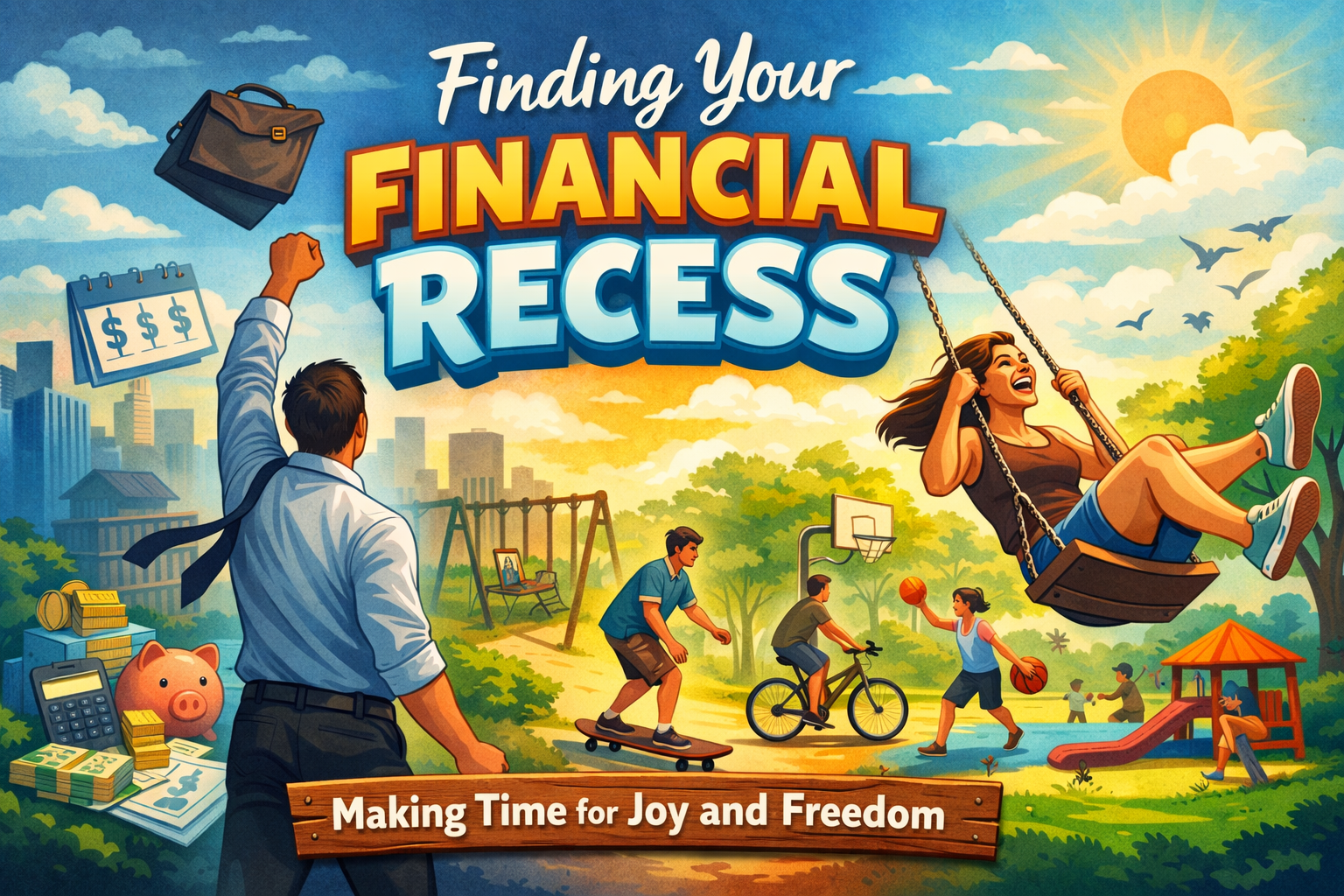
Recess the one constant every kid actually liked about their school day.
Running to the monkey bars to hang off and do tricks. Or sprinting to the basketball court to pretend we were the next big professional basketball player.
Day in and day out, children live for these precious moments. Fifteen minutes on the playground make up for all the other boring school stuff.
But what’s sad is that the older we get, the more we move away from recess.
In high school, it becomes a 15-minute break where everyone stands around, or a 45-minute lunch where you scarf your food down. And that continues into our adult lives.
When we actually have time to partake in a hobby, we rush toward things that cost money. We don’t run to the monkey bars or just go shoot hoops.
We seem to think all our hobbies need to cost money or involve eating out or drinking.
But what if we shifted our mindset back to our youth? What if we found ways to entertain ourselves that were free?
How much better would your life be?
For me, I recently found myself longboarding again and rode around my neighborhood for 30 minutes. I’m a 35-year-old man riding a longboard, and I can say with the utmost certainty it was some of the most fun I’ve had in a long time.
The best part? It was completely free.
And it made me wonder how many others are missing out on this. And how many people are missing out on the journey.
It also made me ask: why did we stop having recess in the first place?
What Financial Recess Means to Adults
As kids, it’s easy to define what recess is, a break from class that allows us to go outside, run around, and play with friends.
But what does financial recess mean?
I see it as time freedom, the ability to step away from expenses, budgets, spreadsheets, and the financial thoughts that constantly consume our minds.
It’s time to enjoy our hobbies guilt-free, without worrying about financial consequences.
However, it’s important to remember this isn’t retirement. It’s about intentionally creating time in our day-to-day lives to do things that bring us enjoyment. These moments need to be prioritized if they’re going to exist at all.
The Problem is That We Lost Recess Along the Way
As we entered high school, many of us stopped doing the things we truly loved and instead focused on what made us look cool.
As we entered adulthood, we shifted again toward things we thought were fun: drinking, eating out, and watching the latest TV series.
Our time with friends became more about spending money than actually having fun.
And when we do find a hobby, we often convince ourselves we need to spend a lot of money to get into it so we never even start.
Take biking, for example. As kids, it didn’t matter what kind of bike we had or what gear we were missing. My friends and I loved riding up and down the street.
But look at adults biking now expensive road bikes, full gear, everything matching.
For a lot of people, that’s not financially realistic, so they avoid it altogether.
But why can’t we go back to our childhood days? Ride a reliable used bike and just cruise around the neighborhood?
There’s no rule saying we can’t.
And I guarantee if you did, you’d forget about your problems, at least for a little while.
Why Financial Recess Matters
As you go through your financial journey, you’ll realize it’s a marathon, not a sprint. And speaking from experience, I can’t run a marathon without taking a break… actually, I can’t run one at all. But you get the point.
The longer you go without stepping away from the spreadsheets, the more likely you are to burn out.
When you take time to do something you truly enjoy, you gain clarity and focus. You start to see what actually matters, and your decision-making improves because of it.
It also strengthens your relationships and improves your health.
For example, while I ride my longboard, my wife runs alongside me. It’s strengthened our bond because we’re doing something that’s both healthy and enjoyable together. We’re breaking out of our routine and focusing on what actually matters.
And honestly, it just makes life more enjoyable.
I find myself at work daydreaming about going home and riding my longboard. And when I’m on it, I feel genuinely happy.
Money is useful, it allows us to buy things and create opportunities. But I’ve learned I don’t need money to do things that make me happy.
I’ve recaptured a piece of being a kid again, and it didn’t cost me anything.
How to Find Your Recess
To find your recess, you need to shift away from asking, “What should I be doing?” to “What do I actually enjoy?”
The goal isn’t to fit in or look cool. The goal is to do something because you want to.
Think back to your childhood, teenage years, or early adulthood. What genuinely made you happy?
Do you miss doing those things?
If the answer is yes, go do them again.
And if you don’t enjoy it anymore, try something else until you find something that lights you up.
Once you find it, make it a priority. Do it as often as you can.
Conclusion: Ringing of the Bell
Being an adult with a lot of responsibilities is hard especially if you never give yourself the chance to have fun.
Recess was essential to our success and happiness as kids, and it should be just as important in adulthood.
Make it a priority, and watch your life, relationships, and health improve.
Remember you don’t need permission to take financial recess. And you don’t need to do things just to fit in.
You just need to build a life that allows you to take it.